

- Dashboard
- CLI
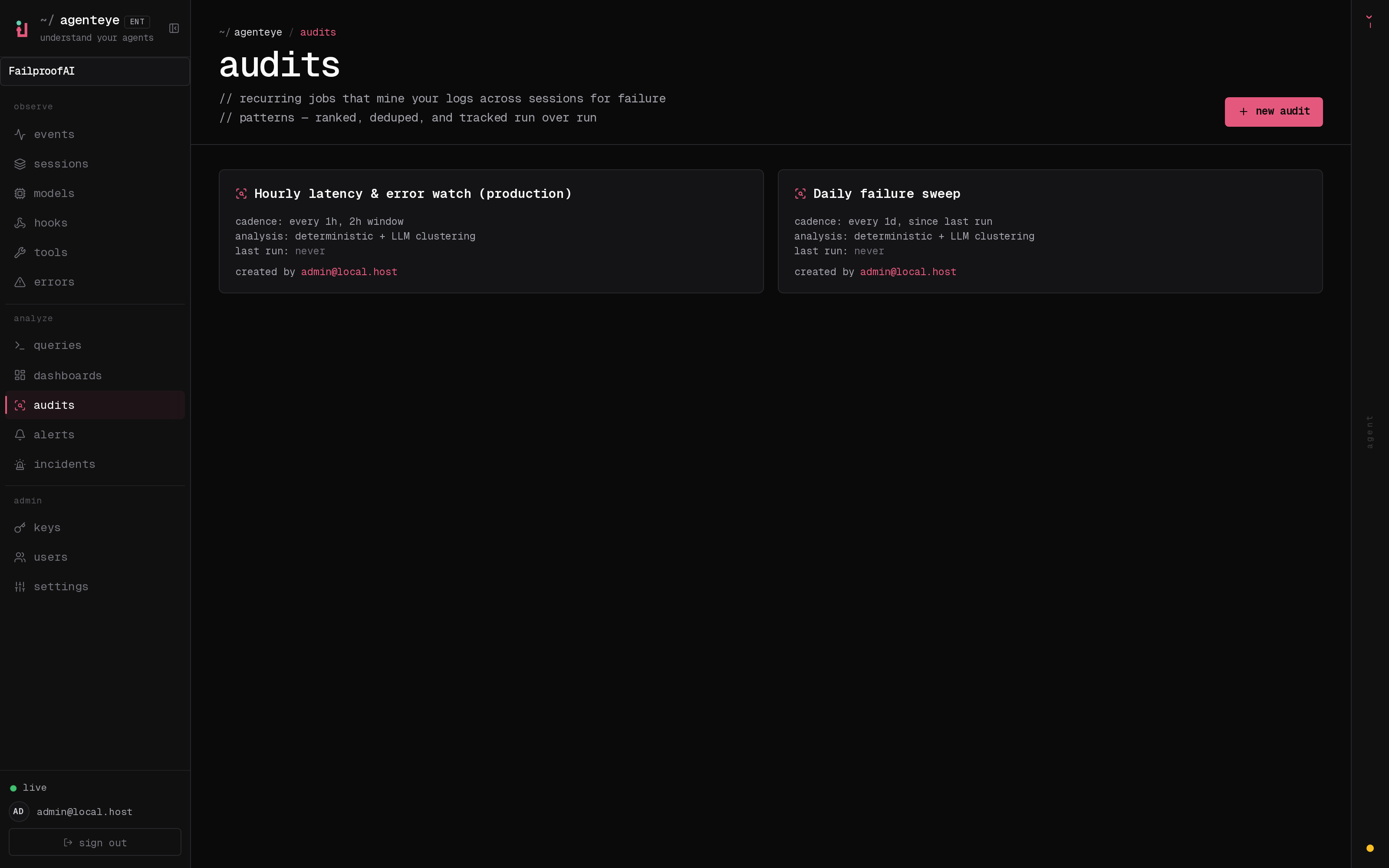
Go to Analyze → Audits → New audit, copy one recipe into the description or brief, then add the relevant environment, agent, lookback, and reference URLs. Create the audit and inspect the first run before scheduling it.The new audit form turns a recipe into an executable failure check by adding scope, context, cadence, and notifications.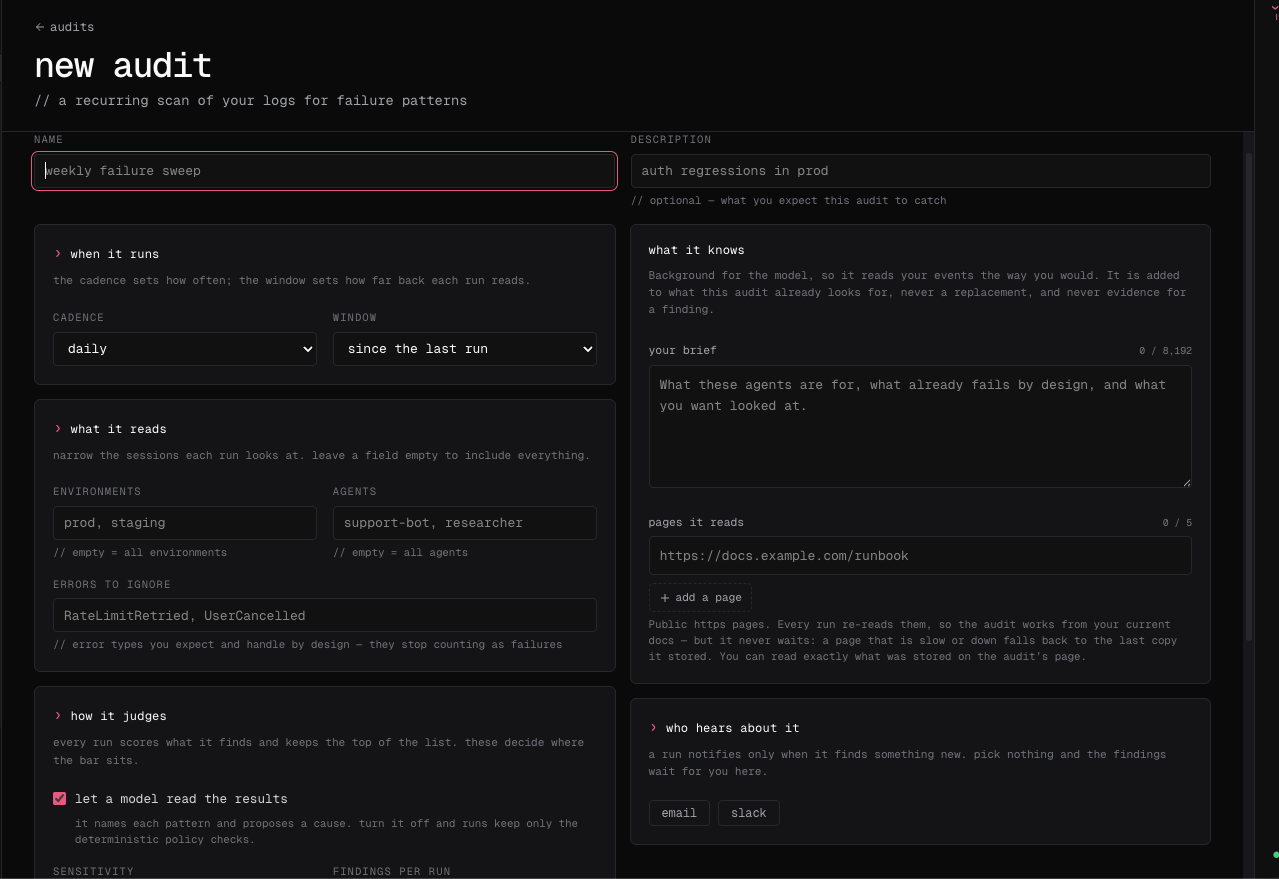
Repeated retry loops
Repeated retry loops
Find sessions where the agent repeats the same failing tool call without changing input, selecting an alternative tool, or escalating to a human.
Incorrect tool use
Incorrect tool use
Find sessions where the chosen tool does not match the stated task, or where tool input violates the workflow’s required preconditions.
Unsafe data access
Unsafe data access
Find sessions that read, write, or transmit sensitive data outside the approved paths and services for this agent.
Task abandonment
Task abandonment
Find sessions that end without the requested outcome, a clear error, or an explicit handoff to a human.
Cost or latency regression
Cost or latency regression
Find sessions whose model, tool, or total duration exceeds the expected budget, and identify the event pattern responsible.
Missed human escalation
Missed human escalation
Find sessions where confidence, repeated failure, or policy guidance required a human decision but the agent continued autonomously.